Is a default ever really a default? The challenge of designing retirement defaults
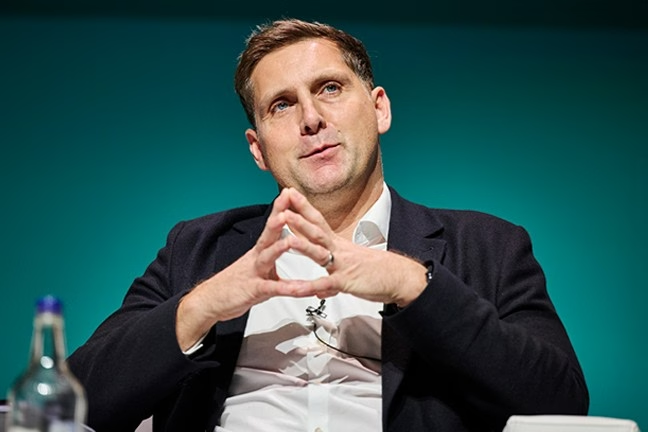
In Liverpool, the Minister challenged the industry to stand behind its retirement defaults. Here’s what Jamie Fiveash, CEO of Smart UK, has to say.

The Minister was right to challenge us in Liverpool
Apparently, some providers have said a good outcome would be none of their customers ending up in the default, because everyone will have chosen a bespoke solution instead. His point was simple: if you aren't behind your default, it probably isn't very good.
Fair enough. Defaults made auto-enrolment work. We support them at retirement too.
But designing a default for retirement is much harder than designing one for saving. And if we get the design wrong, we'll get the outcome wrong too.
Start with the numbers
The Pensions Policy Institute projects that the median DC pot for today's 55 to 64 year olds will be around £70,000 by State Pension age. A quarter will have less than £19,000 (PPI DC Future Book 2026). That's real money. But it doesn't buy a real income. Turn £70,000 into an income for life and you're looking at a few thousand pounds a year. Fixed. Forever.
So what happens if the only default on offer is an income for life? I think we'll see more cash-outs, not fewer. Cashing out is already the most common way people first access a pension. Last year almost half of pots were taken in full, accepting that most of them worth less than £10,000 (FCA). Very few people want to lock in for life on a low income when the same money could clear a debt or fix the roof. A default that drives people to take the lot isn't protecting anyone.
Then there's the question of who goes into it. I suspect the regulations will say questions do have to be asked before anyone is defaulted. Do you have a partner? Other pensions? Are you still working? Renting? That's sensible. But once you're asking questions and sending people down different routes, it isn't really a default anymore. It's a bespoke default. Which is pretty much what those providers were saying in the first place.
And there's another problem we're not talking about enough. Most people don't have one DC pot. They have several, one for every job they've had. Deferred memberships in workplace DC schemes now outnumber active ones by almost two to one: 21.3 million against 11.4 million (PPI DC Future Book 2026).
Now imagine each of those schemes running its own retirement default. Five pots means five sets of questions, five defaults, and five small incomes. Everyone ends up with multiple retirements. That's confusing for savers, and it undermines the whole point of a default.
If we want defaults to work, we need to help people bring their pots together before they retire, not after. Otherwise the default gets decided pot by pot, not person by person.
Let's not lose sight of the bigger picture either. For most people, a DC pot is only a small part of their overall wealth. The State Pension already pays an income for life, worth £241.30 a week at the full rate (Which?). Many people retiring over the next few years will have a DB pension too.
For them, longevity protection is already there. Their DC pot isn't their income for life. It's the flexible bit.
So what are savers actually telling us?
Our Retirement Report 2026 surveyed 3,000 people. The message is clear: the cliff-edge retirement is over.
44% say the word "retirement" no longer reflects what they expect from later life. Among women it's 48%. Over a third want to keep working in some way, but only 11% of them want to carry on full time. Half want their current job with fewer hours, and 39% want to do something different altogether.
It's strongest among those closest to retirement. 45% of 50 to 65 year olds want to keep doing a version of their current job, just less of it. And 42% of people say they wouldn't seek any help or guidance about later life at all.
When our team asked the same questions in Liverpool, the answers were even stronger. 59% said "retirement" no longer fits, compared with 44% nationally. 61% wanted to stay in some paid work, compared with 36%. The top new phrase for retirement? "A new chapter". Not a full stop.
That has big implications for retirement income. If half of those who want to keep working want their current job with fewer hours, many people's early retirement years will be funded partly by wages. Their pension isn't replacing their salary. It's topping it up. And as their hours fall, or stop altogether, what they need from their pension changes too.
So there's no single right moment to switch on an income for life. Especially in the early years, solutions need to be dynamic - drawing less while people are still earning, more as work winds down, and adjusting as their outgoings change. A fixed monthly payment won't do that. And with 32% of people telling us tax and pension rules are a barrier to working longer, the system isn't built for this yet either. So is a default ever really a default? I'm not sure it is.
Our promise to members
What we're really talking about is making sure everyone has access to longevity protection when they need it, without being forced to lock in too early.
That's our homework, and we'll do it by:
- standing behind our default, and designing it for the pots people actually have
- helping members bring their pots together before they retire, so they get one retirement, not five
- building longevity protection in, so it's there when members are ready for it
- keeping it dynamic in the early years, when work, income and outgoings are still changing
- making the guidance simple, because four in ten people won't go looking for it
The Minister has set the challenge. I think Smart Pension can meet it. Not by arguing over labels, but by building retirement solutions around how people actually live.
About Smart Pension
Launched in 2015, Smart Pension now exceeds £10bn in Assets Under Management (AUM) and serves 2 million members and 100,000 employers. It is powered by Keystone, Smart’s global savings and investments technology platform.
Aquiline, Barclays, Chrysalis Investments, DWS Group, Fidelity InternationalStrategic Ventures, J.P. Morgan, MUFG and Natixis Investment Managers are all investors in Smart Pension.