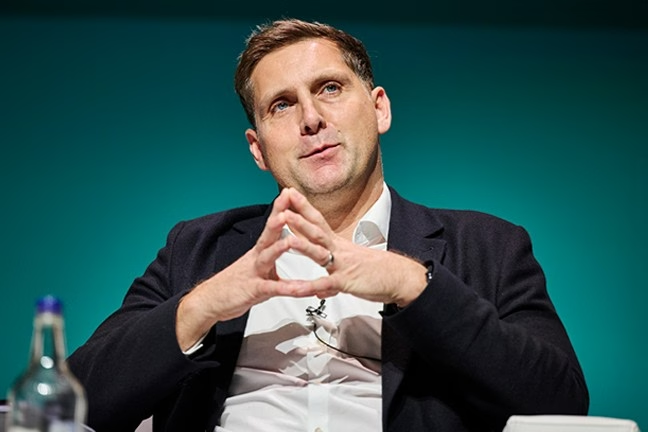
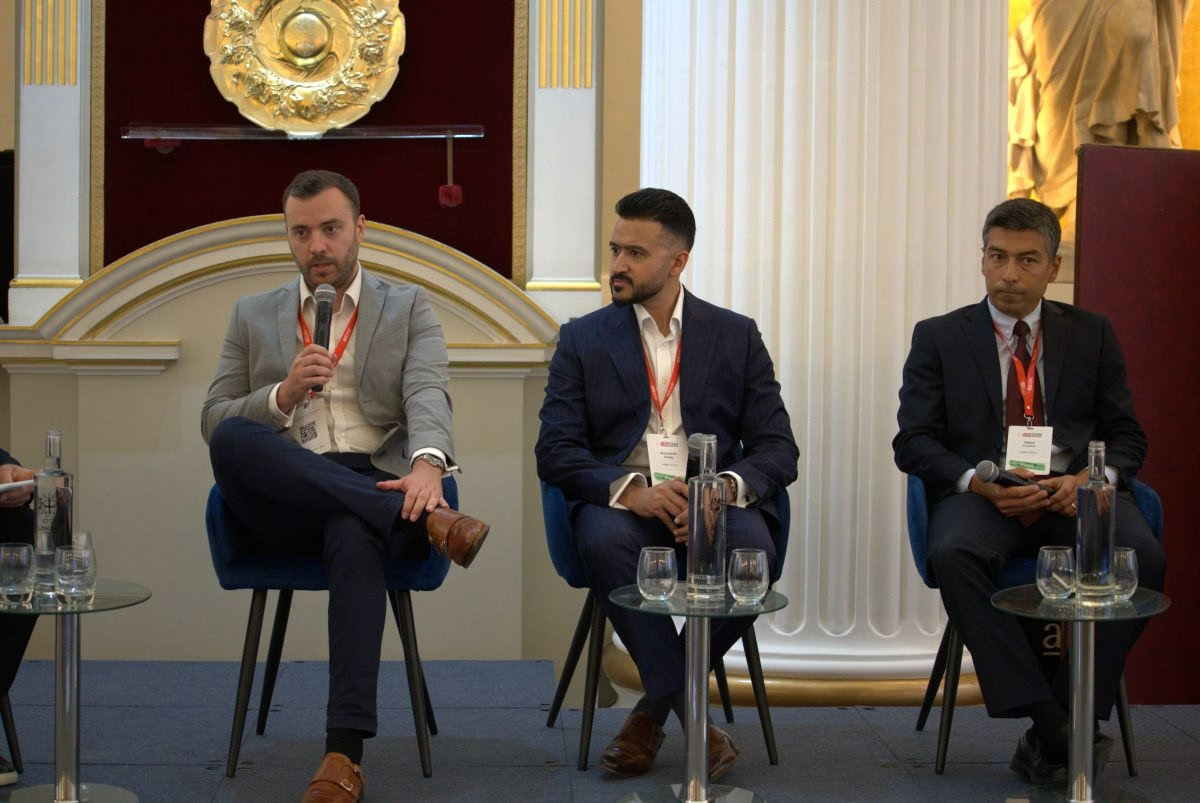
Hear from Jamie Fiveash featured in Pensions Age
Smart UK chief executive and incoming Pensions UK chair, Jamie Fiveash, discusses the changes occurring in the DC industry, including reforming the DC transfer framework, delivering true value for money, and resolving the small pots problem.

The future of Pensions
Looking at recent developments in the UK pensions sector, the Pension Schemes Act has been a major driver of change.
What are your views on the reforms it is bringing about, and what impact do you think they will have on the industry?
As an industry, we have been asking for a vision of what good looks like, and we have now got one, with the roadmap. If we have any chance of hitting what was the 2030 timetable, the work needs to start now because technology change will be needed. If we wait for the government to initiate that, it will take some years. We need to get on and shape that so the legislation can fit around what good looks like. Value for money is a good example of something in the Act that will be a real force for good. We desperately need standardisation of measures and metrics to allow consumers to compare, and also to have standards of what quality looks like. There are also few initiatives circulating on how to solve the small pots problem, and we are leading one of them called Pathfinder, in collaboration with seven other master trusts. We are trying to lead that project to look at how we can improve the overriding governance and infrastructure of transfers. If you can do that, you can make it easier and more efficient to move small pots. But you have to start with the underlying foundations of the current DC pension transfer system, which, in our opinion, is no longer fit for purpose.
One of the most debated aspects of the legislation was the government’s proposed mandation powers to encourage UK pension schemes to invest more in the domestic economy.
Now that the debate has settled somewhat, what is your perspective on that issue?
Principally, mandation is focus wrong because trustees and providers need to have the power to do what is in the best interests of members. Of course, I do have some sympathy with the government, where it is probably concerned that unless providers are regulated to do something, it does not get done. We have all signed up to the Mansion House Accord. We think that having a diversified portfolio of growth assets is the right thing to do for our customers, so that is what we were working towards anyway. We are working towards 15 per cent investment in private markets, so finding a third of that for the UK was not a big issue for us because we think there are lots of good investment opportunities in the UK. For instance, in the UK, we are invested in Octopus Energy, with a number of UK projects in renewable energy, whether that is wind farms or heat pumps, that provide good, stable investment returns. This is why I think value for money is so important; it should push the drive toward value and away from pure cost, while also looking more at investment performance.
What was the thinking behind Smart Pension decision to allocate 15 per cent of its flagship fund to private markets?
The driver behind that is predominantly that in DC, there has obviously been a real focus on low charges and cost versus value. When you focus purely on cost, you limit yourself on what you can invest in immediately. Without a doubt, we were overweight in passive tracking equities in the DC market when you look globally. Public equities have done very well, so people immediately gravitate toward that. But that is not the typical trend in an economic lifecycle, where you will get dips and therefore need a spread of growth stocks. On that basis, we are investing to meet the trustees’ investment objective that we set for the default fund, CPI plus 3.5 per cent over a business life cycle. We think that private markets will play an important part in delivering that.
Both within the Pension Schemes Act and more broadly, consolidation has been a recurring theme in the evolution of the UK pensions industry.
What are your thoughts on this?
There is a drive toward scale, and scale should mean that you can drive better value for customers, but it is more complicated than people think. If you are a really large provider but you are actually running thousands of different default funds on 10 different admin platforms, you are eroding those scalable benefits. Choice and differentiation can be the enemy of scale benefits. DC When you look at the contract based market, a lot of that consolidation has actually gone into about 10 providers. However, unlike what you can do in a trust, they have all largely stayed independent. Therefore, the scale benefits have not been realised within the contract-based market. Real consolidation is actually about how providers are consolidated internally.
What does scale mean for Smart Pension?
We are fortunate that we do not have legacy systems. Technology is the USP that enables us to do that. As an example, 90 per cent of all transactions can now be done by the customer through our app. By this time next year, we aim for that to be nearly 100 per cent with the advancements of things like AI. That means we can spend more time on the phone adding value for the customer and spend more on investment, while lowering the overall charge.
Is the industry keen to embrace the cost efficiencies of new technologies, or is there still caution around solutions such as integrating AI?
There is still a bit of caution. If you have been running in the market for a number of years, it takes bold decisions to say you are going to invest in a project to re-platform millions of customers off an old legacy platform. Technology and AI can support our agents by enabling them to have more value-added conversations. Our view is never to remove the human element, but to use technology to enhance it.
A key rationale for consolidation has been the potential to achieve economies of scale and improve value for money.
What does value for money look like for you?
During the accumulation phase in particular, it boils down to net returns and service excellence. In those ‘moments of truth’ for the customer, are you there for them? It becomes a lot more difficult in decumulation, where it needs to get much more personalised. Over time, the decumulation default we should be thinking about is not about the product; it is about guidance, advice, and service. I feel at times we do not look at it through the consumer lens. We are a bit obsessed with inventing new products, but there are already enough products in the market. For instance, some people talk about CDC, but it is not a silver bullet. CDC is a potential retirement product solution among a number of options, but I am less convinced that many employers will want to go for it during the accumulation phase.
Finally, what would you identify as the key long-term priorities for the pensions sector as a whole?
As the new chair of Pensions UK, as well as Smart UK’s chief executive, it’s clear to me that we as an industry need that long-term roadmap. There is an obvious sequencing required. For instance, we do need to consolidate the market first. Once you have consolidated the market, you can then consider the best way for small pots to move across providers. However, the ultimate long-term priority is to ensure that people have an adequate income in retirement, and that public sector, private sector, and wider individual wealth all work together to support customers.
About Smart Pension
Launched in 2015, Smart Pension now exceeds £10bn in Assets Under Management (AUM) and serves 2 million members and 100,000 employers. It is powered by Keystone, Smart’s global savings and investments technology platform.
Aquiline, Barclays, Chrysalis Investments, DWS Group, Fidelity InternationalStrategic Ventures, J.P. Morgan, MUFG and Natixis Investment Managers are all investors in Smart Pension.